
Hot Products


0102030405
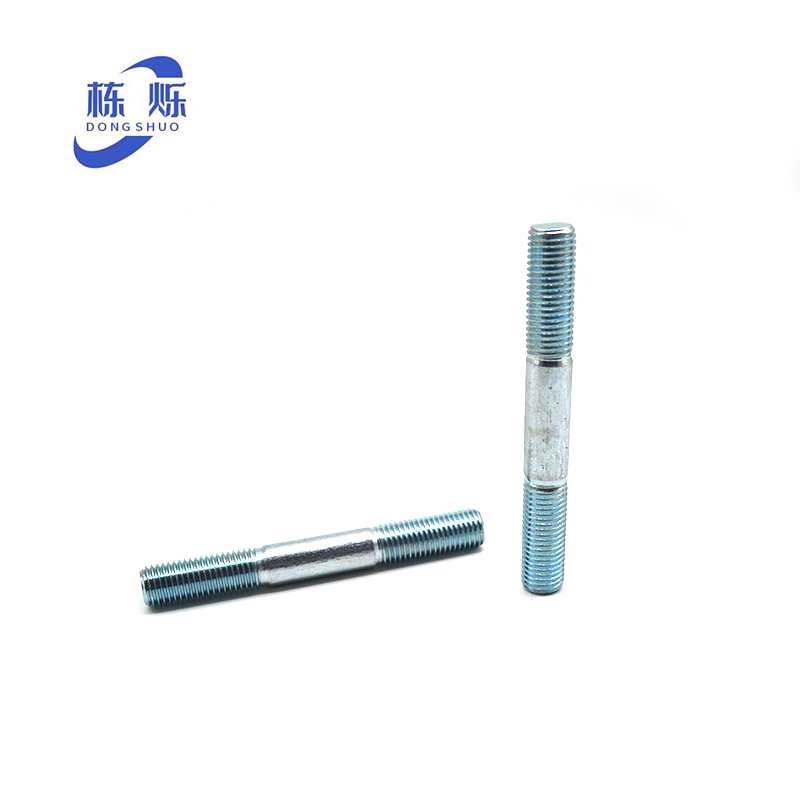
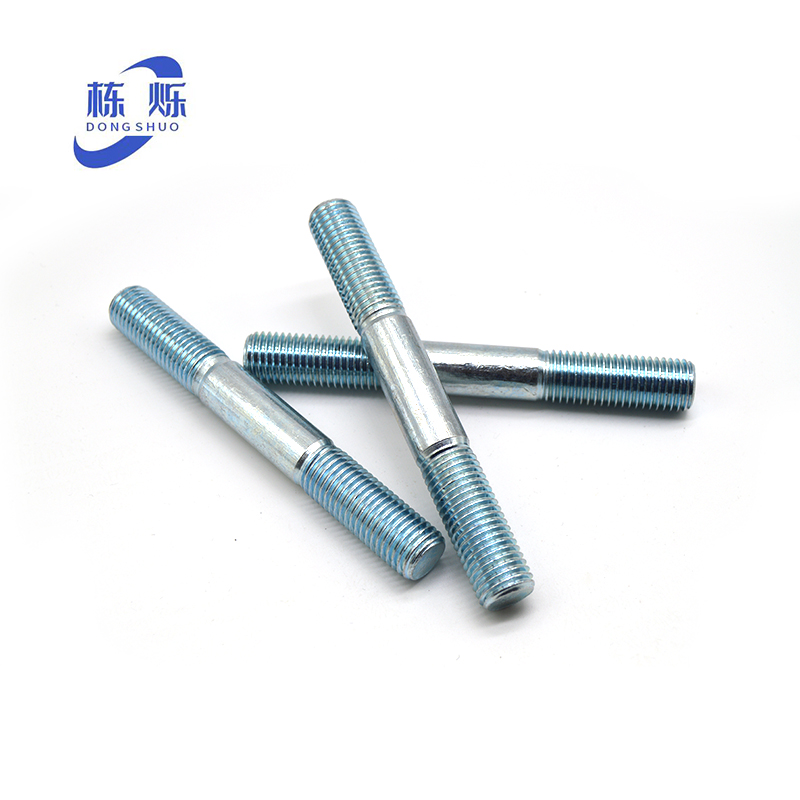
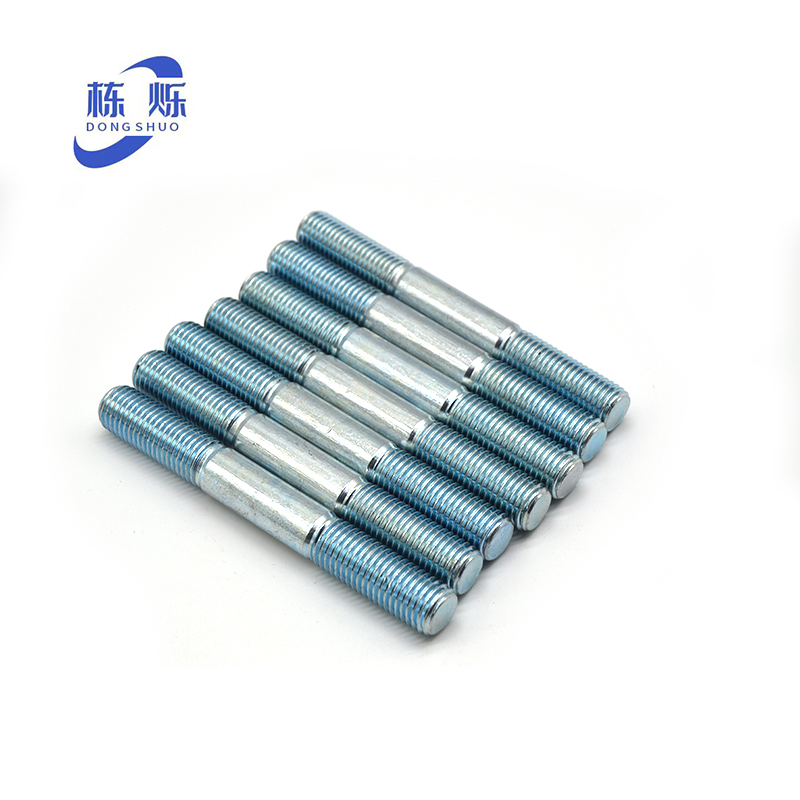
Galvanized & Blackened Double-Headed Bolts 4.8/8.8 Grade - Reliable Connection by China Suppliers & Factory

| Thread size d |
M6 | M8 | M10 | M12 | M14 | M16 | M18 | M20 | M22 | M24 | M27 | M30 | M33 | |
| designation① | D | D | D | D | D | D | D | D | D | D | D | D | D | |
| / | / | D-HDZ | D-HDZ | D-HDZ | D-HDZ | D-HDZ | D-HDZ | D-HDZ | D-HDZ | D-HDZ | D-HDZ | D-HDZ | ||
| ds | Max | 5.32 | 7.16 | 8.99 | 10.83 | 12.66 | 14.66 | 16.33 | 18.33 | 20.33 | 22 | 25 | 27.67 | 30.67 |
| Min | 5.14 | 6.97 | 8.78 | 10.59 | 12.41 | 14.41 | 16.07 | 18.07 | 20.07 | 21.69 | 24.69 | 27.34 | 30.34 | |
| S | Public | 50 | 63 | 75 | 100 | 115 | 125 | 140 | 150 | 165 | 175 | 200 | 200 | 225 |
| Max | 75 | 88 | 100 | 125 | 140 | 150 | 165 | 175 | 190 | 200 | 225 | 225 | 250 | |
| Min | 42 | 55 | 67 | 92 | 107 | 117 | 132 | 142 | 157 | 167 | 192 | 192 | 217 | |
| Connecting nut | M6 | M8 | M10 | M12 | M14 | M16 | M18 | M20 | M22 | M24 | M27 | M30 | M33 | |
🔩
The Function of Double Headed Bolts
-
⚙️
1. Connecting Mechanical Components Double headed bolts have threads at both ends and a screw in the middle, commonly used to connect mechanical components such as mining machinery, bridges, automobiles, motorcycles, boiler steel structures, suspension towers, large-span steel structures, and large buildings.
-
🔧
2. Installation Accessories When large equipment requires the installation of accessories, such as observation mirrors, mechanical seal seats, reduction frames, etc., double headed bolts can play a role. One end is screwed into the main body, and after installing the accessories, the other end is equipped with a nut. Due to the fact that these attachments may require frequent disassembly, using double headed bolts for replacement would be very convenient.
-
🏗️
3. Connecting Thick Plates and Inconvenient Areas In cases where the thickness of the connectors is large or the connection area is not convenient to use hexagonal bolts, such as concrete roof trusses, roof beam suspensions, monorail beam suspensions, etc., double headed bolts are also a suitable choice.
-
🔗
4. Fixed Connecting Rod Double headed bolts are also commonly used for mechanical fixed connecting rods, with corresponding threads at both ends. The thickness of the middle screw varies depending on actual usage.
❓ Frequently Asked Questions
Q
What is a double headed bolt and how does it differ from a standard bolt?
A double headed bolt (also called a stud bolt) features threads at both ends with a plain or threaded shank in the middle. Unlike a standard bolt which has a head on one end, a double headed bolt is designed to be screwed into a tapped hole on one end and secured with a nut on the other, making it ideal for applications requiring frequent assembly and disassembly.
Q
What thread sizes are available for double headed bolts?
Double headed bolts are available in a wide range of metric thread sizes, from M6 up to M33 and beyond. Common sizes include M6, M8, M10, M12, M14, M16, M18, M20, M22, M24, M27, M30, and M33, covering most industrial and structural applications.
Q
What does the designation "D-HDZ" mean in the specification table?
The designation "D-HDZ" refers to a specific surface treatment or product classification for double headed bolts, typically indicating hot-dip galvanized (HDZ) finish. This coating provides enhanced corrosion resistance, making the bolts suitable for outdoor, marine, or high-humidity environments.
Q
In which industries are double headed bolts most commonly used?
Double headed bolts are widely used across multiple industries including mining machinery, construction (bridges, large-span steel structures, concrete roof trusses), automotive and motorcycle manufacturing, boiler and pressure vessel fabrication, suspension towers, and large building projects where strong, reliable fastening is required.
Q
Why are double headed bolts preferred for frequently disassembled equipment?
Because one end of the double headed bolt remains permanently screwed into the main body (such as a machine housing or base), only the nut on the other end needs to be removed during maintenance. This preserves the threaded hole in the main body and prevents wear, making reassembly faster and reducing the risk of damage compared to repeatedly inserting and removing a standard bolt.
Q
How do I select the correct double headed bolt size for my application?
Selecting the correct size involves considering the thread diameter (d), the required grip length (S), the shank diameter (ds), and the load requirements of your application. Refer to the specification table for the standard public, maximum, and minimum values for each thread size. It is also important to match the connecting nut size to the corresponding bolt thread size for a secure and reliable connection.